An expedition log in ten encounters
Recorded by Akshat Bhaskar
Lodha Genius Programme · 2025 Cohort
28°8911'N 77°1263'E · Sonipat, Haryana · Great Ideas
One of the most extraordinary parts of the Lodha Genius Programme was the Great Ideas Seminar series — lectures and conversations with Nobel laureates, leading scientists, and innovators from across the world. These were not lectures in the conventional sense. They were windows into how exceptional minds observe, question, and sit with uncertainty.
What follows is a field record: ten encounters, each noted as close to the original experience as memory allows. The margin carries context; the centre carries the encounter itself.
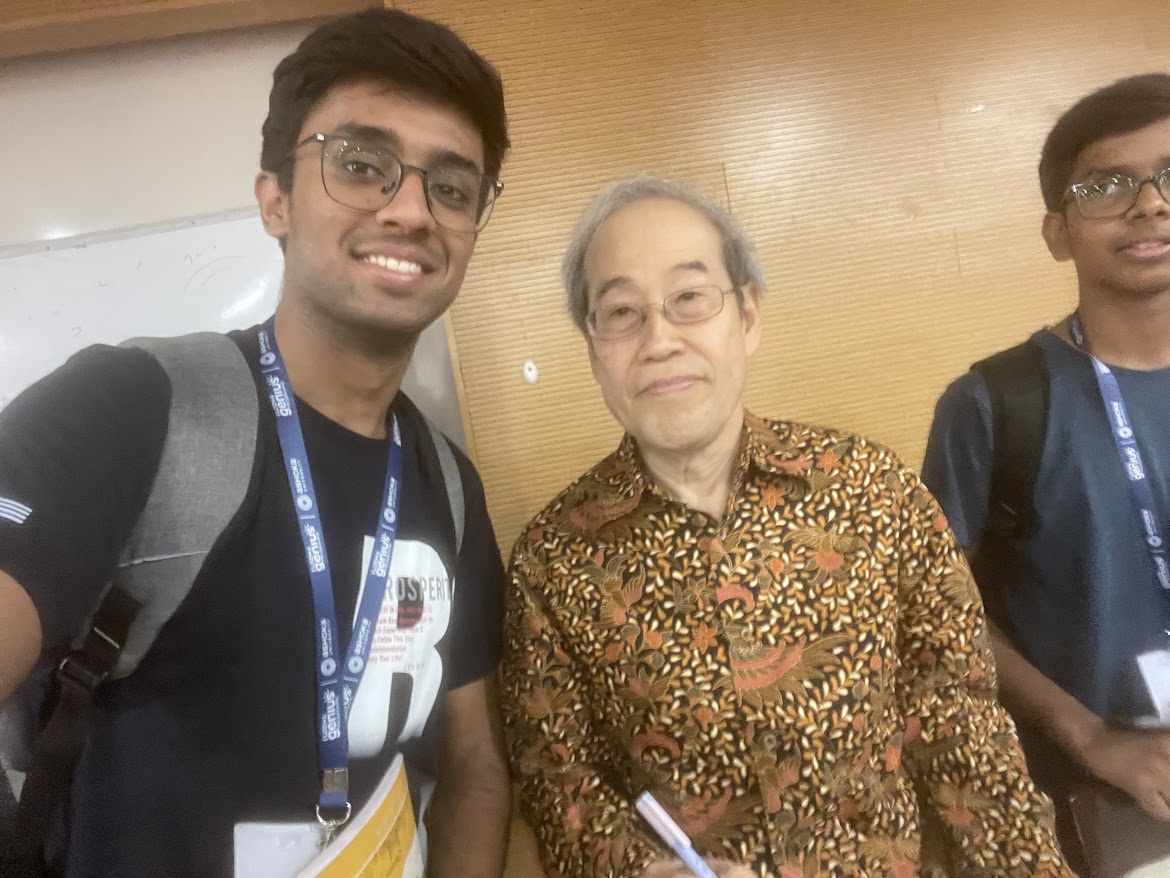
Professor Haruzo Hida · Distinguished Research Professor, UCLA · Steele Prize 2019
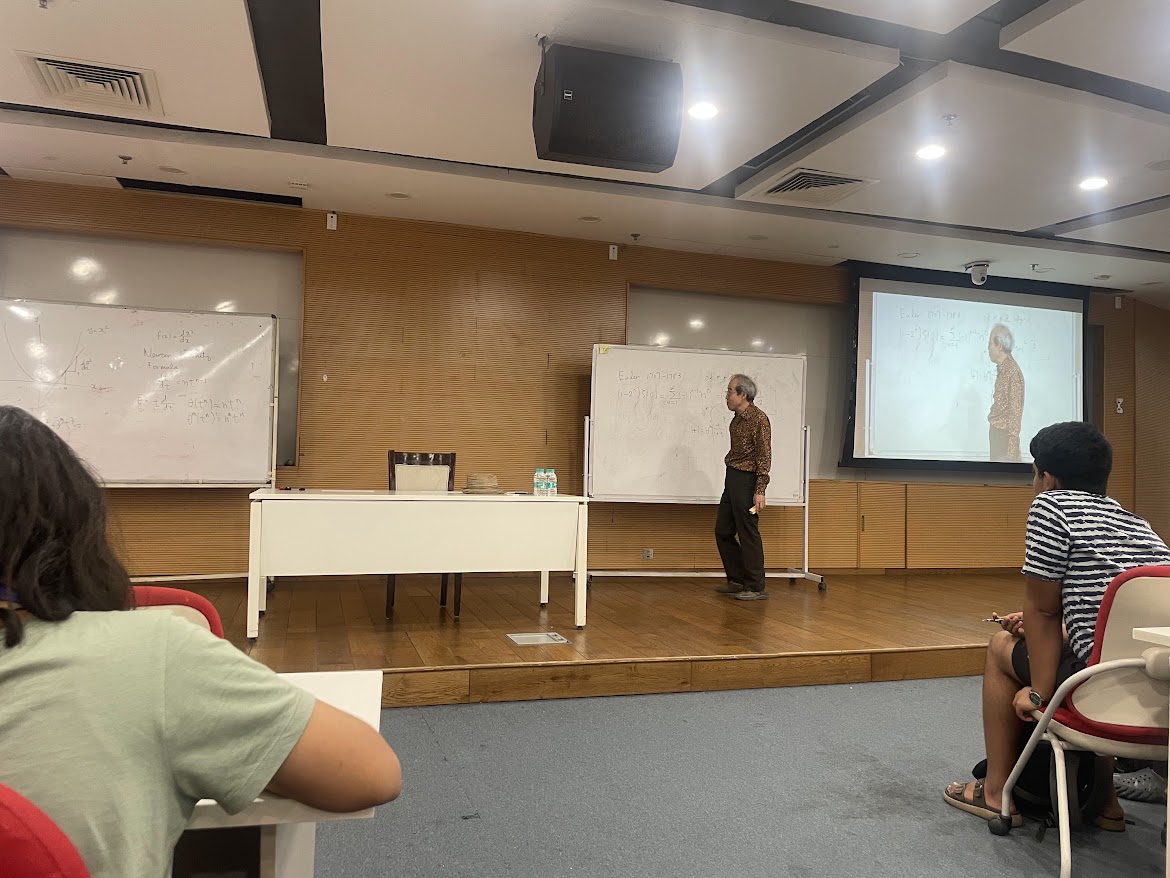
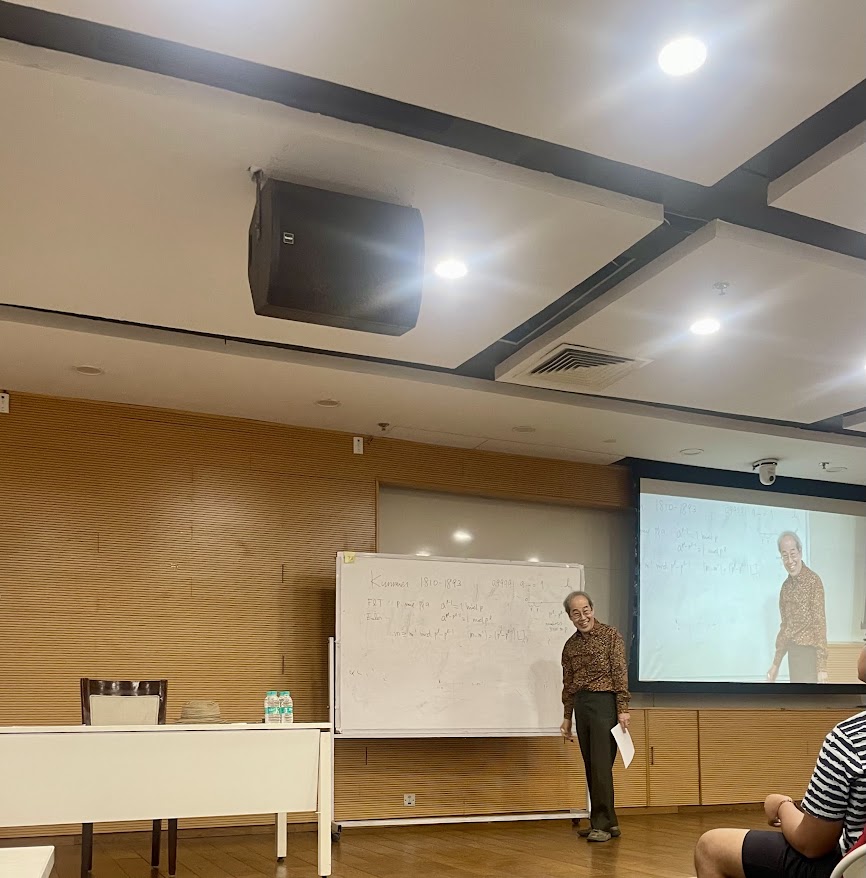
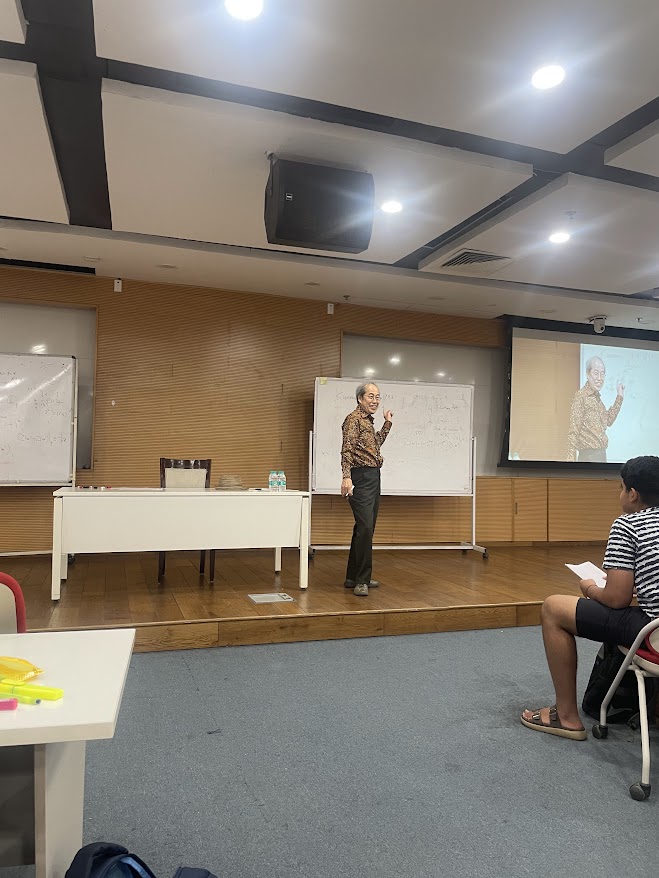
Professor Hida walked us through Euler's remarkable resolution of the Basel problem — how the sum of reciprocals of perfect squares connects, improbably, to π². The lecture moved between the purely computational and the philosophically strange: why should a discrete sum converge to an irrational involving a circle? We learnt much about how research actually proceeds in pure mathematics — the patience, the dead ends, the role of analogy.
We also heard, in passing, about Professor Hida's collaboration with Sir Andrew Wiles — the Abel Prize laureate who proved Fermat's Last Theorem. History felt briefly close.
Professor Raja GuhaThakurta, UCO/Lick Observatory, UC Santa Cruz · Professor Brian Schmidt, Nobel Prize in Physics 2011 · Vice-Chancellor, ANU
A joint session tracing the discovery that the universe's expansion is not slowing down — it is accelerating. The counterintuitive finding earned Schmidt and his collaborators the Nobel. The session moved from observational technique to philosophical implication: what does it mean that most of the universe is dark matter and dark energy, things we can infer but not directly see?
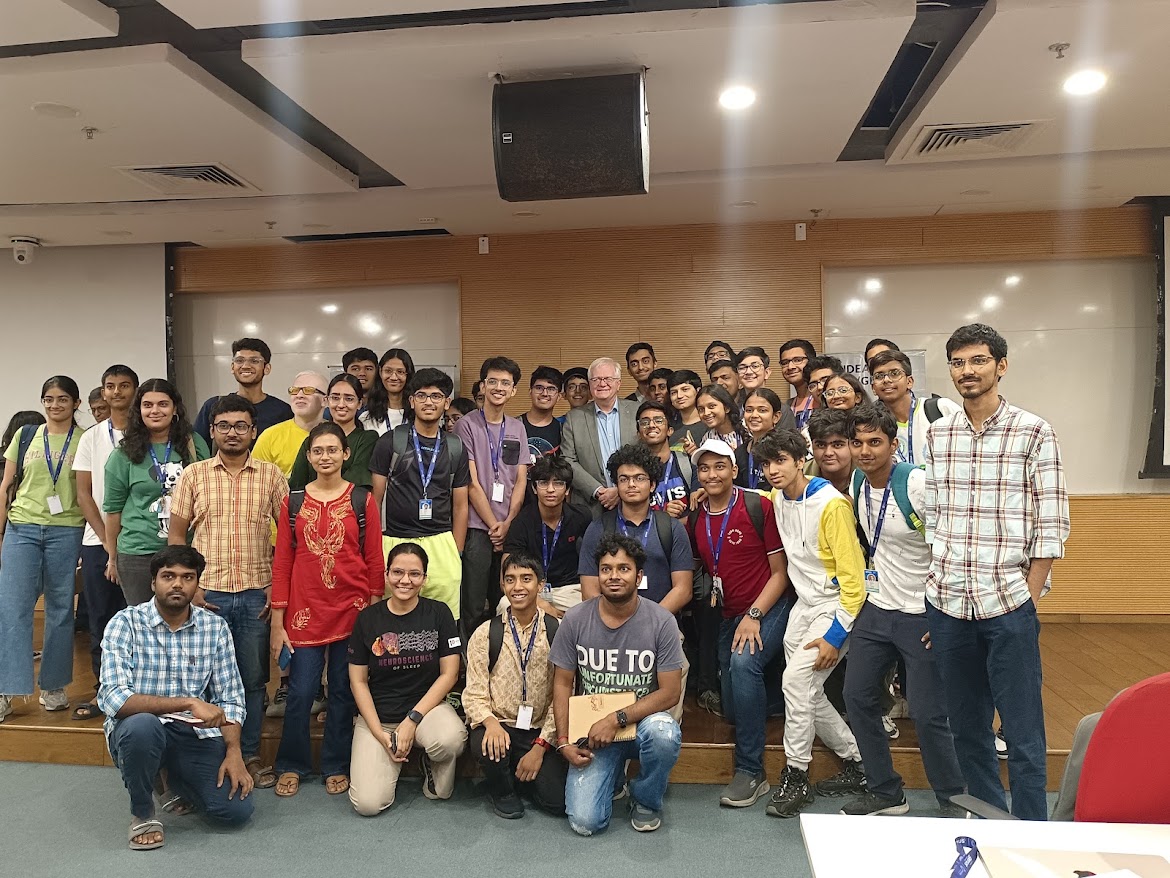
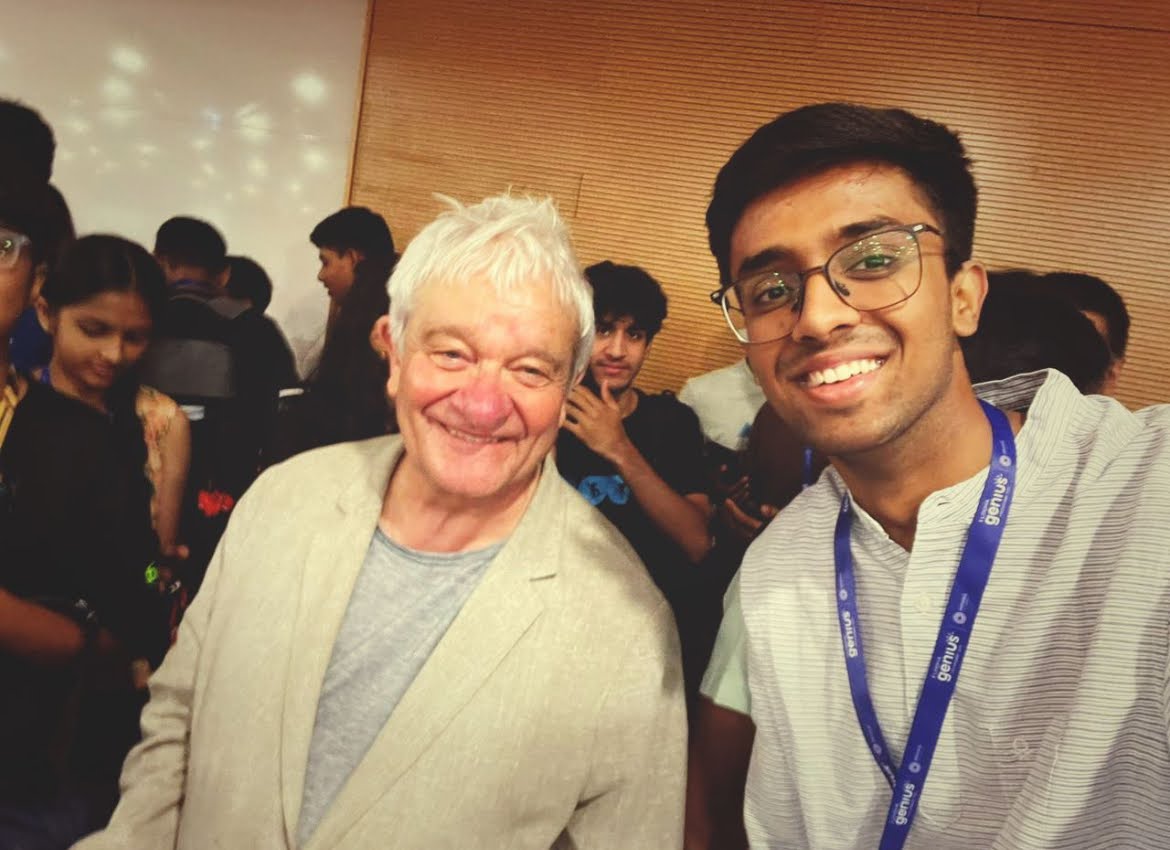
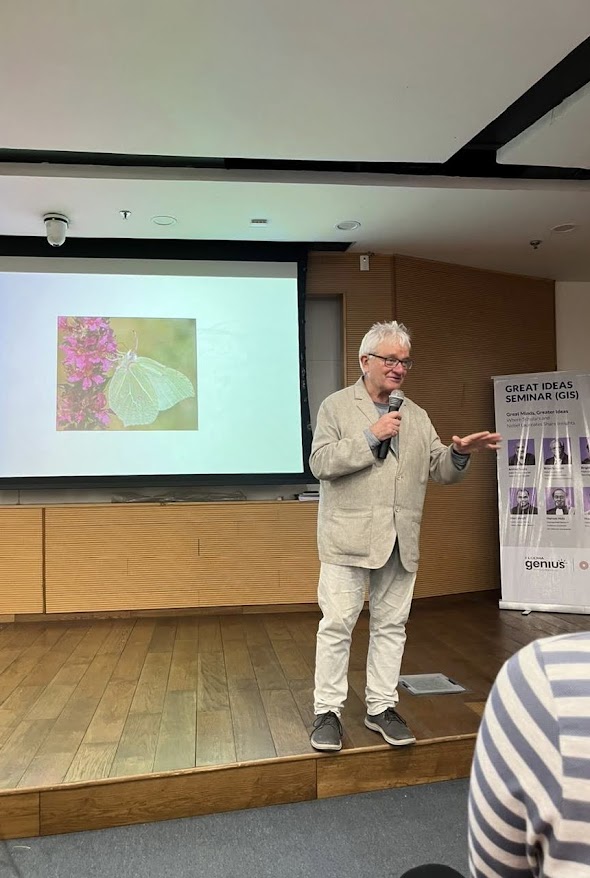
Sir Paul Nurse · Nobel Prize in Physiology or Medicine, 2001 · Director, Francis Crick Institute
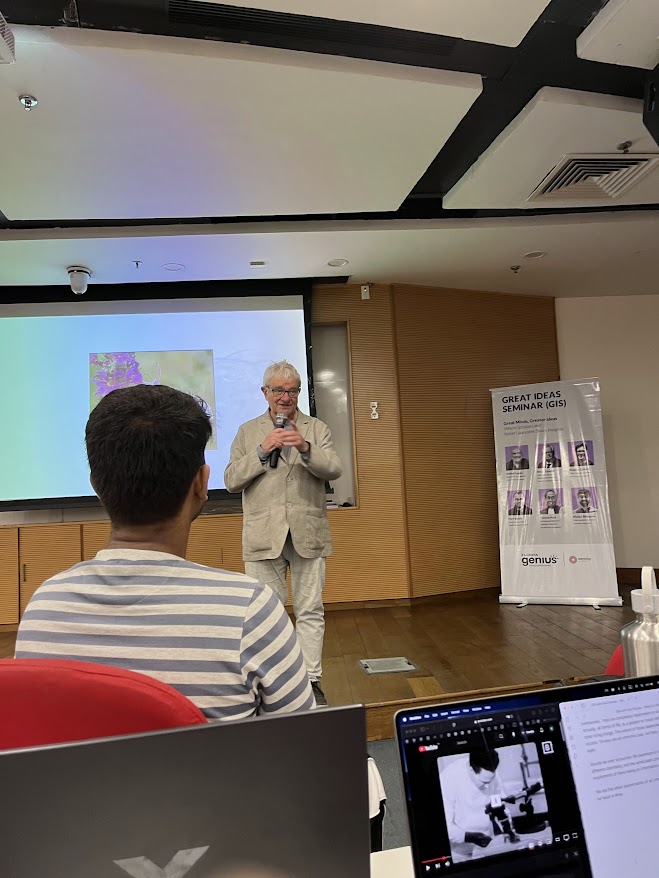
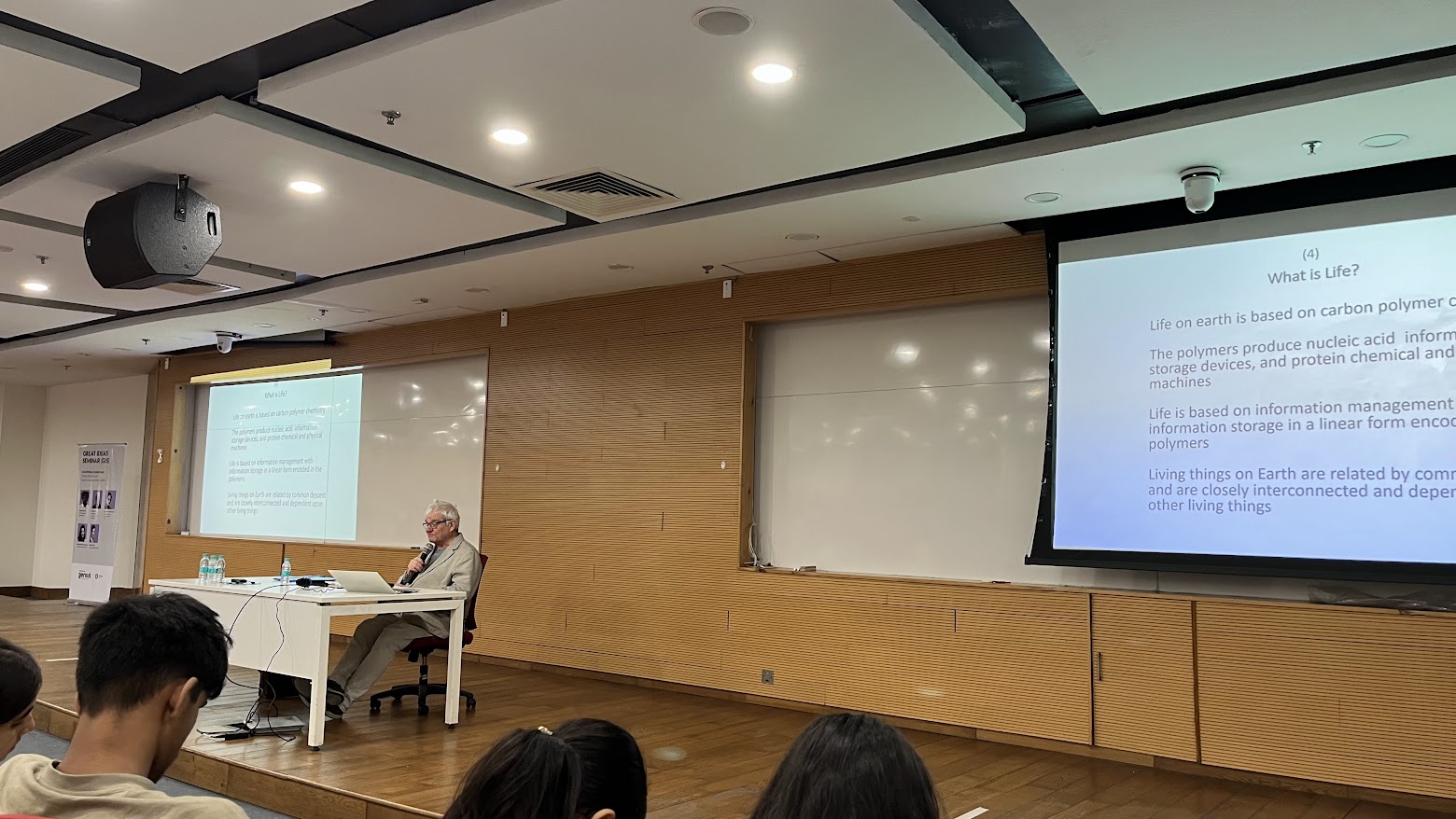
Sir Paul took on a question that sounds simple until you try to answer it. He approached it through information: how is it stored, how is it transmitted, how does an egg reliably become the same organism every time? The lecture was one of the most thought-provoking hours of the programme. We also received, free of charge, copies of his book What is Life? (2020) — delivered to our homes by LGP.
Dr. Brigitte Godard, ESA Space Surgeon · Dr. Sharmila Bhattacharya, Principal Investigator, NASA Ames
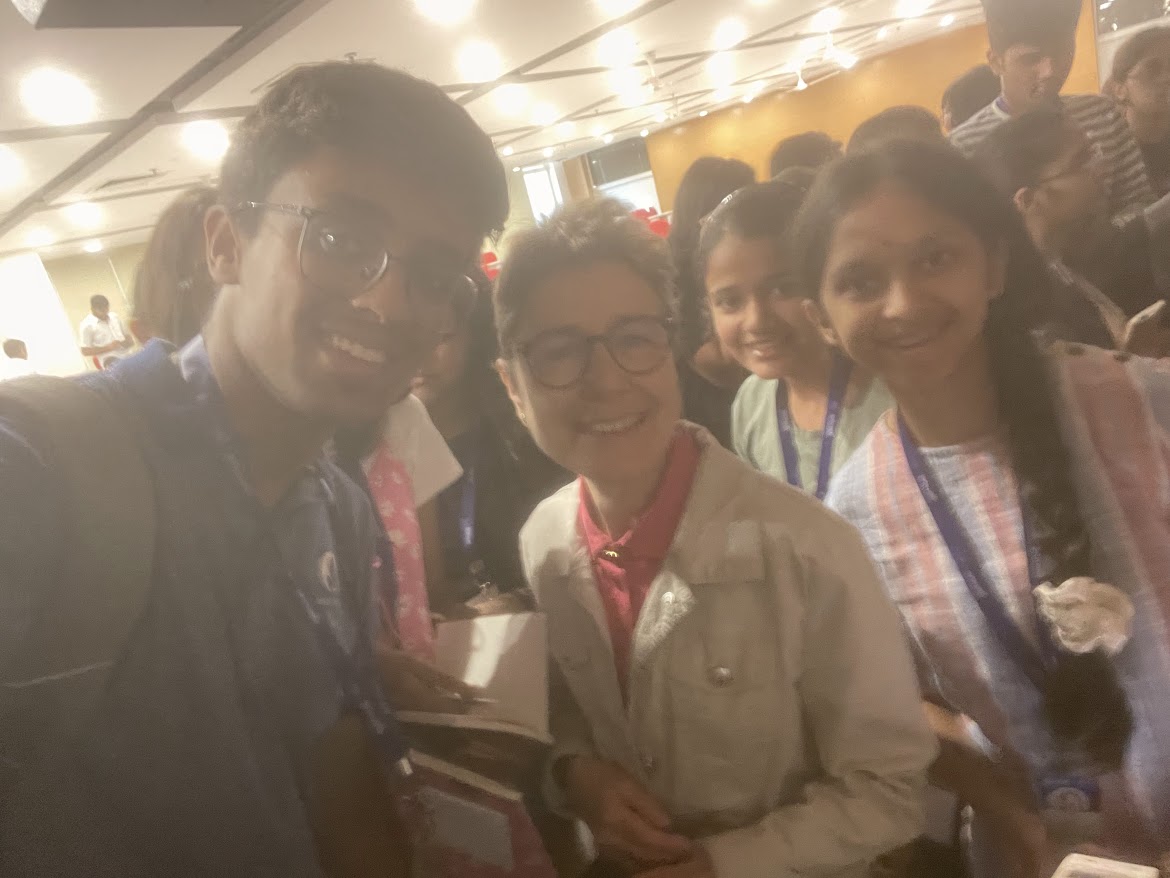
What happens to the human body in space? Microgravity and isolation alter biology in ways that challenge medicine on Earth. Dr. Bhattacharya's work on model organisms and Dr. Godard's clinical experience with astronauts made this one of the most grounded talks of the series — practical consequence meeting frontier science.
Professor Thomas Lecuit · Professor, Collège de France
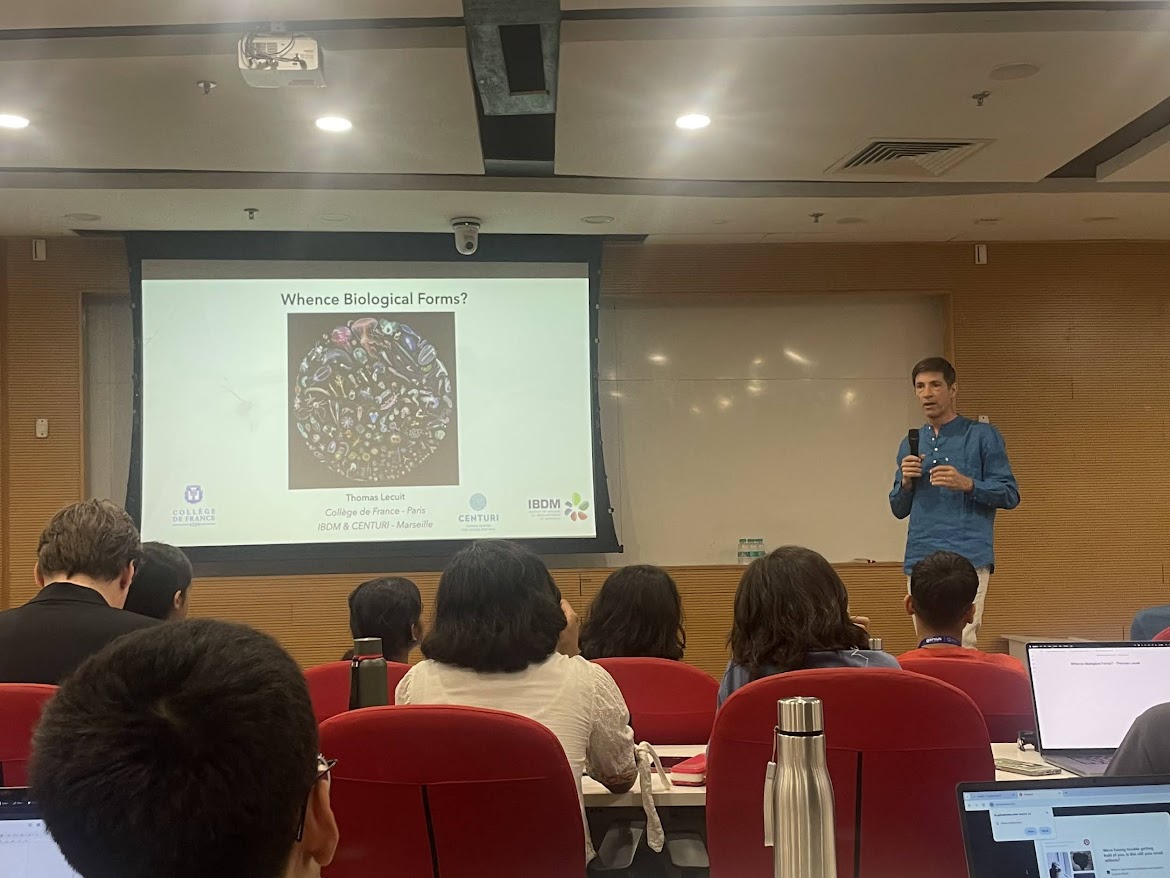
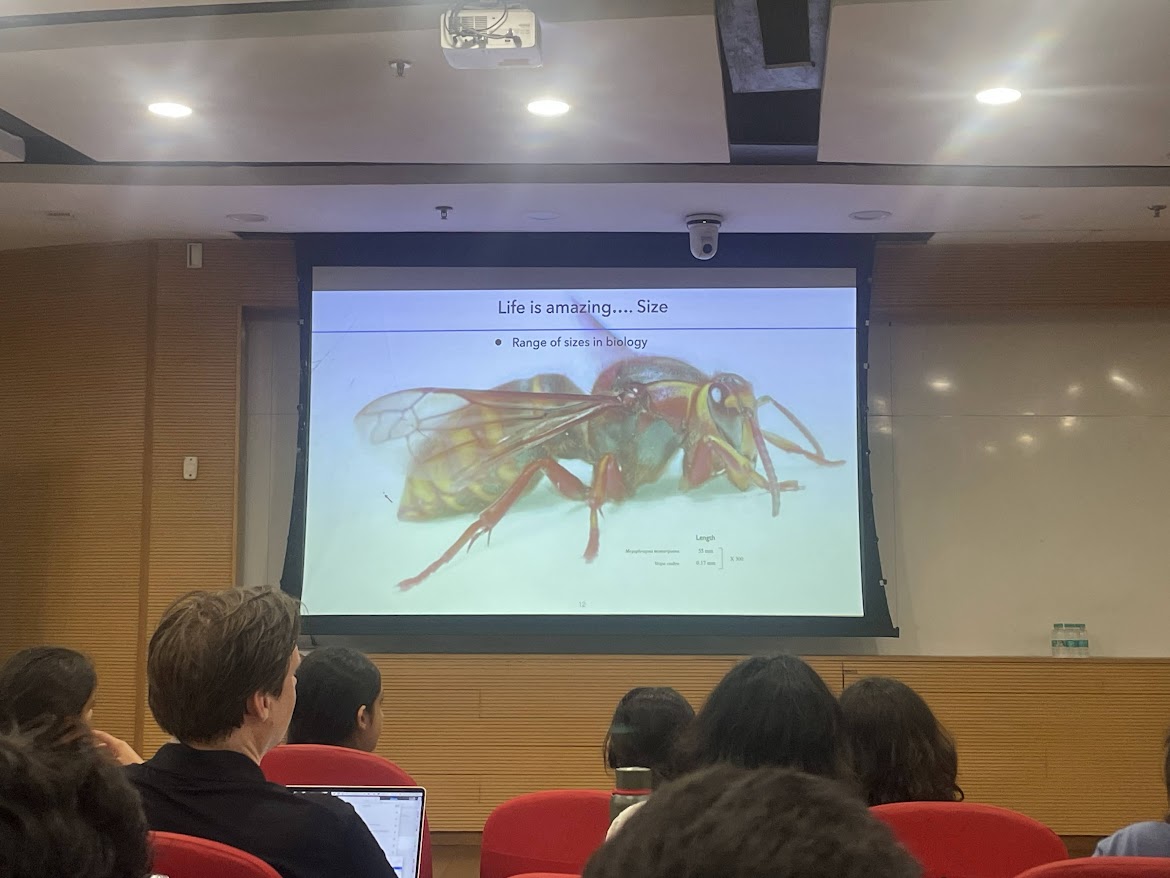
Professor Lecuit studies the question of morphogenesis: how does a single fertilised egg reliably produce the same complex organism every time? His talk bridged physics and biology, exploring the mechanical forces and signalling pathways that sculpt living tissue. It also brought into relief the sheer scale of variation in living forms — size, symmetry, architecture — and what it takes to understand that variation mathematically.
Hari Shroff · Senior Group Leader, Janelia Research Campus
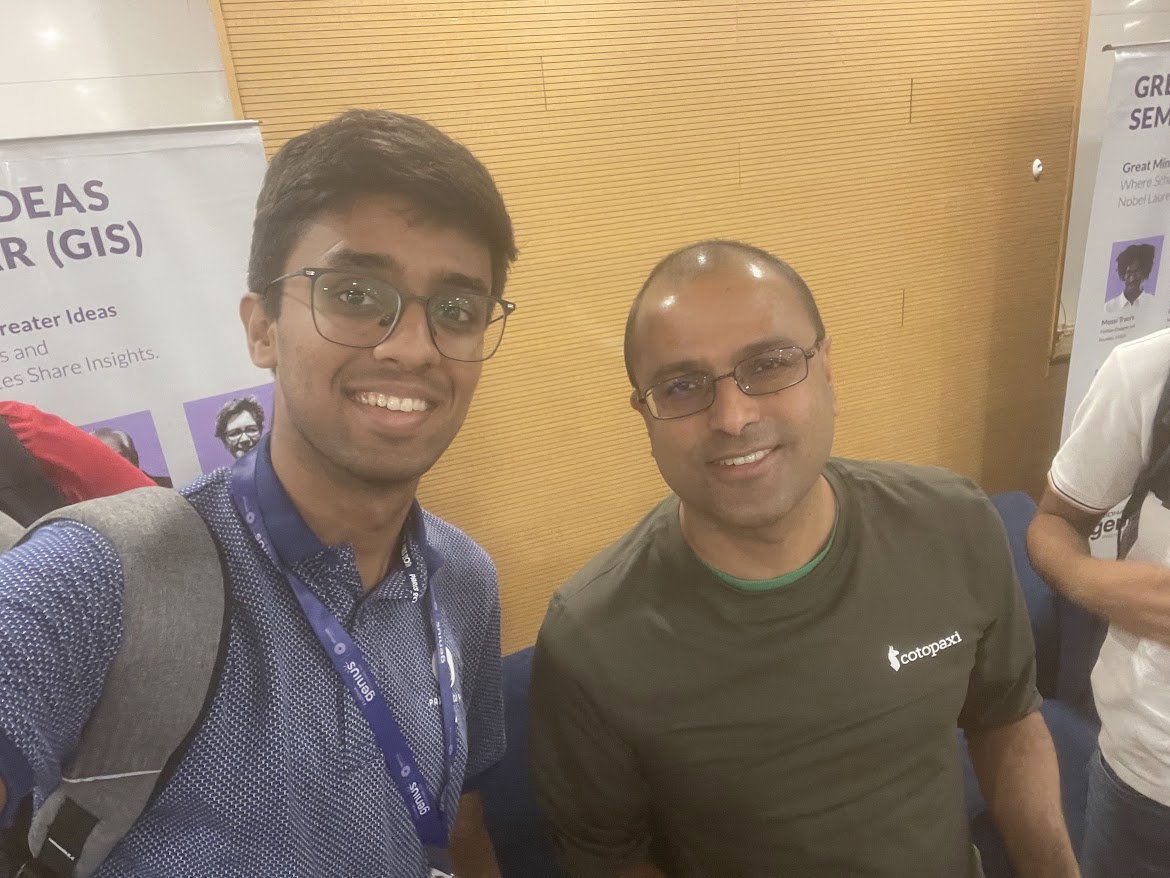
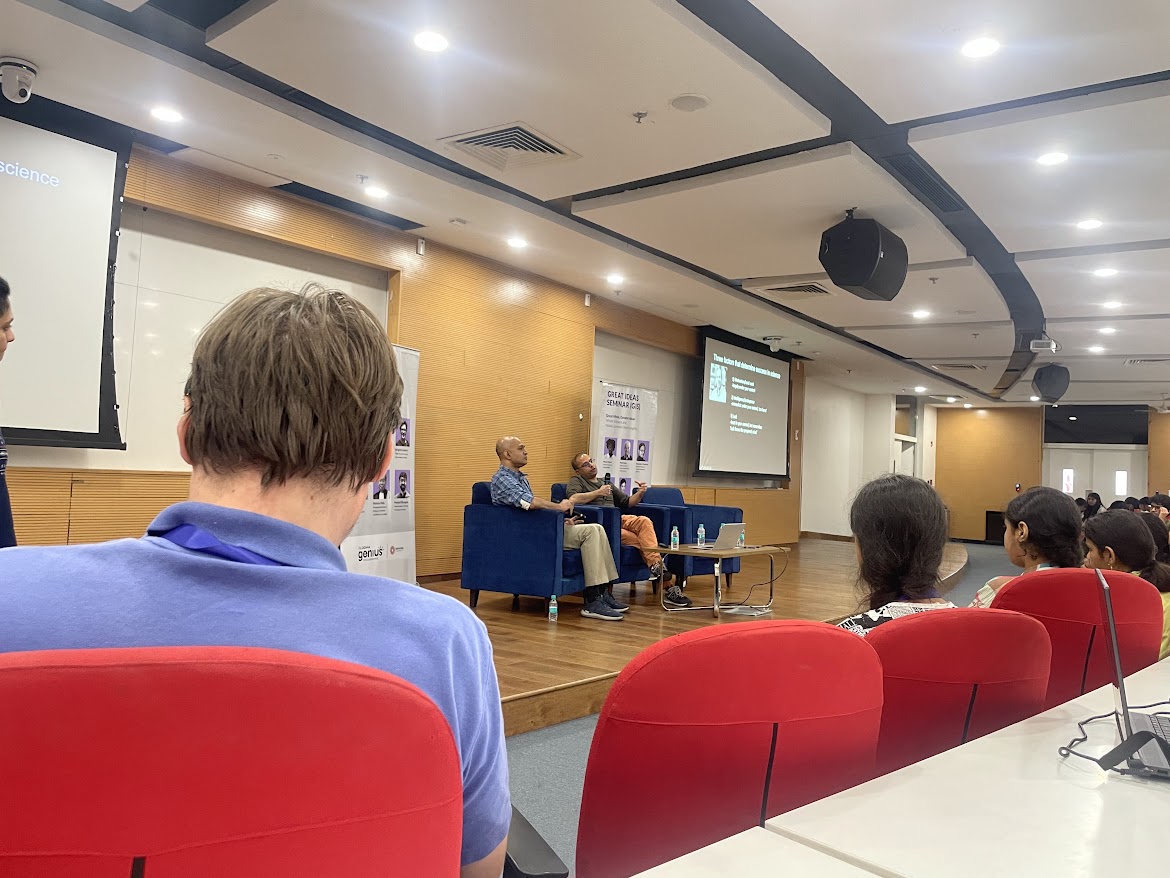
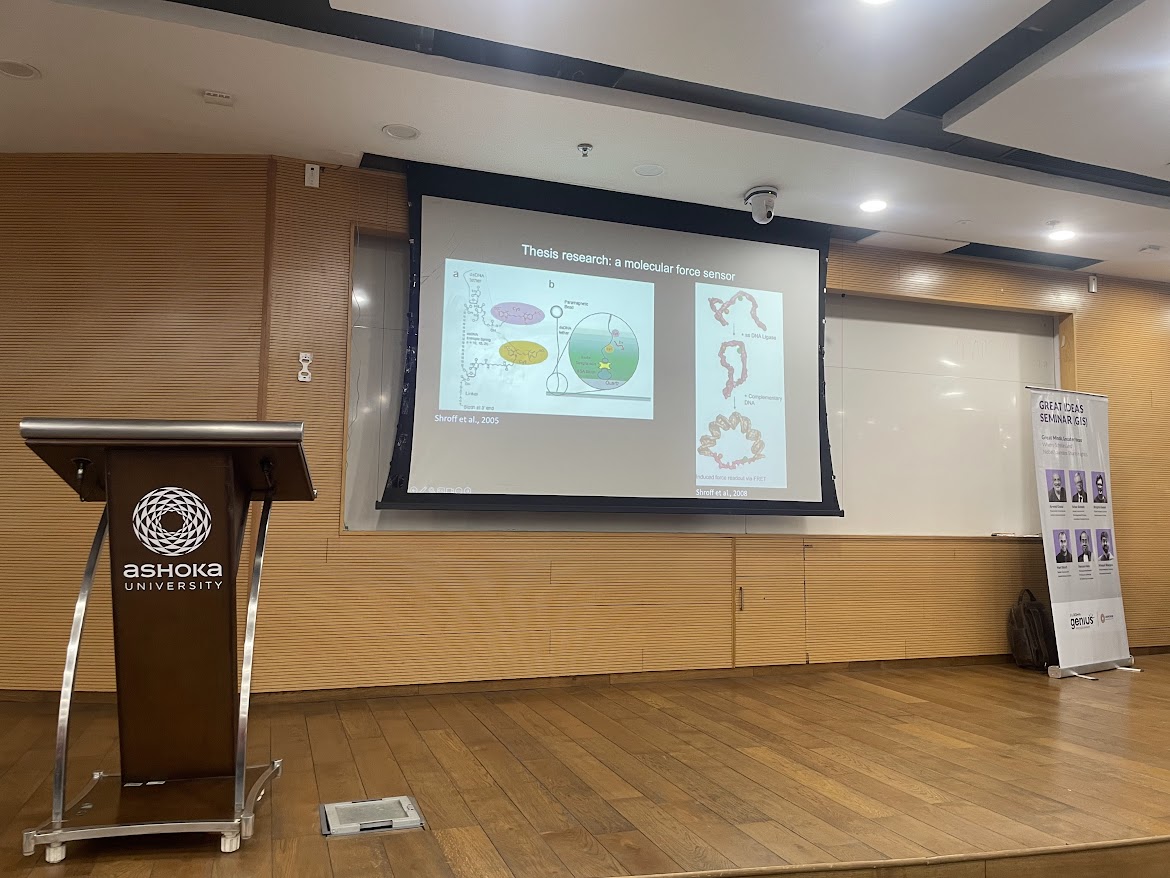
Shroff has built microscopes that can image living cells at resolutions and speeds previously thought impossible. The session was a close study of his team's instruments — the engineering, the physics, the sheer patience required to develop tools that let us see what was invisible. It raised a question we returned to often: to what extent does what we can measure shape what we think we understand?
Arvind Gupta · Padma Shri · Science Educator, IIT Kanpur
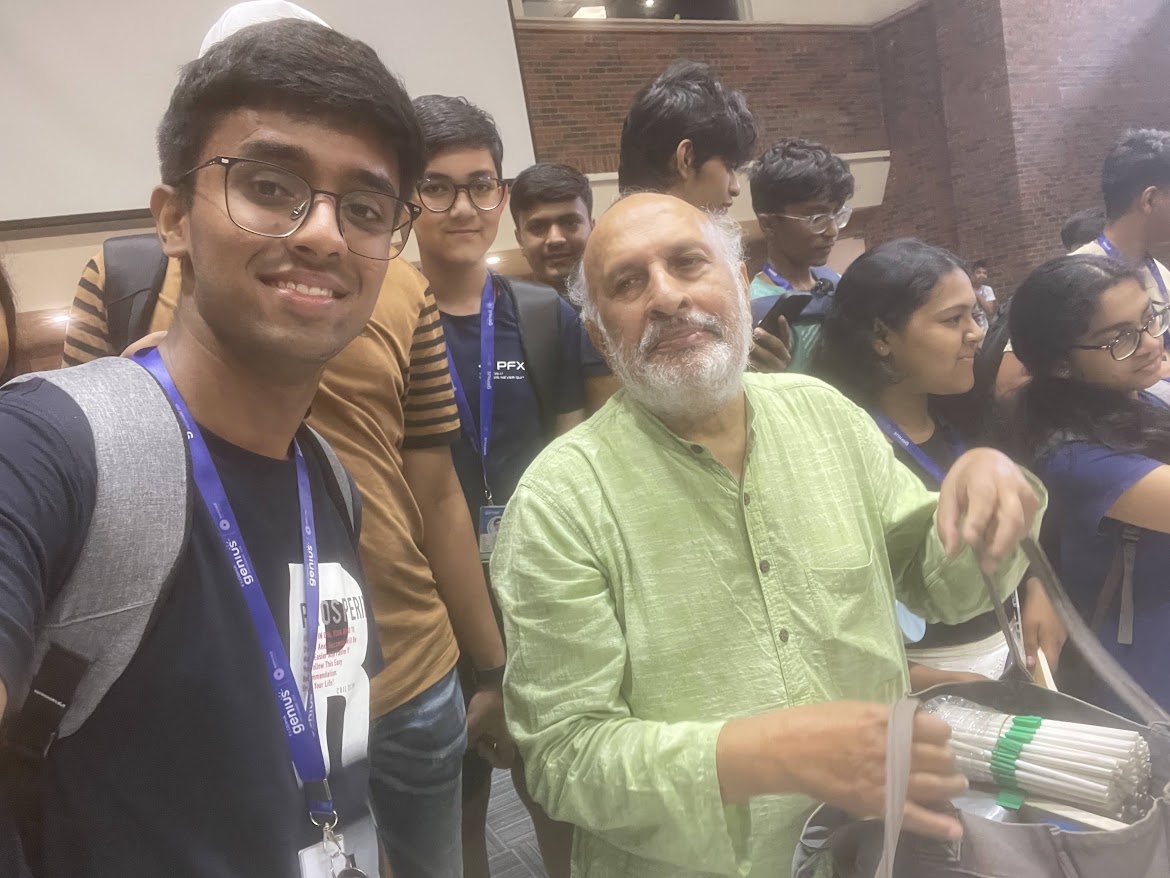
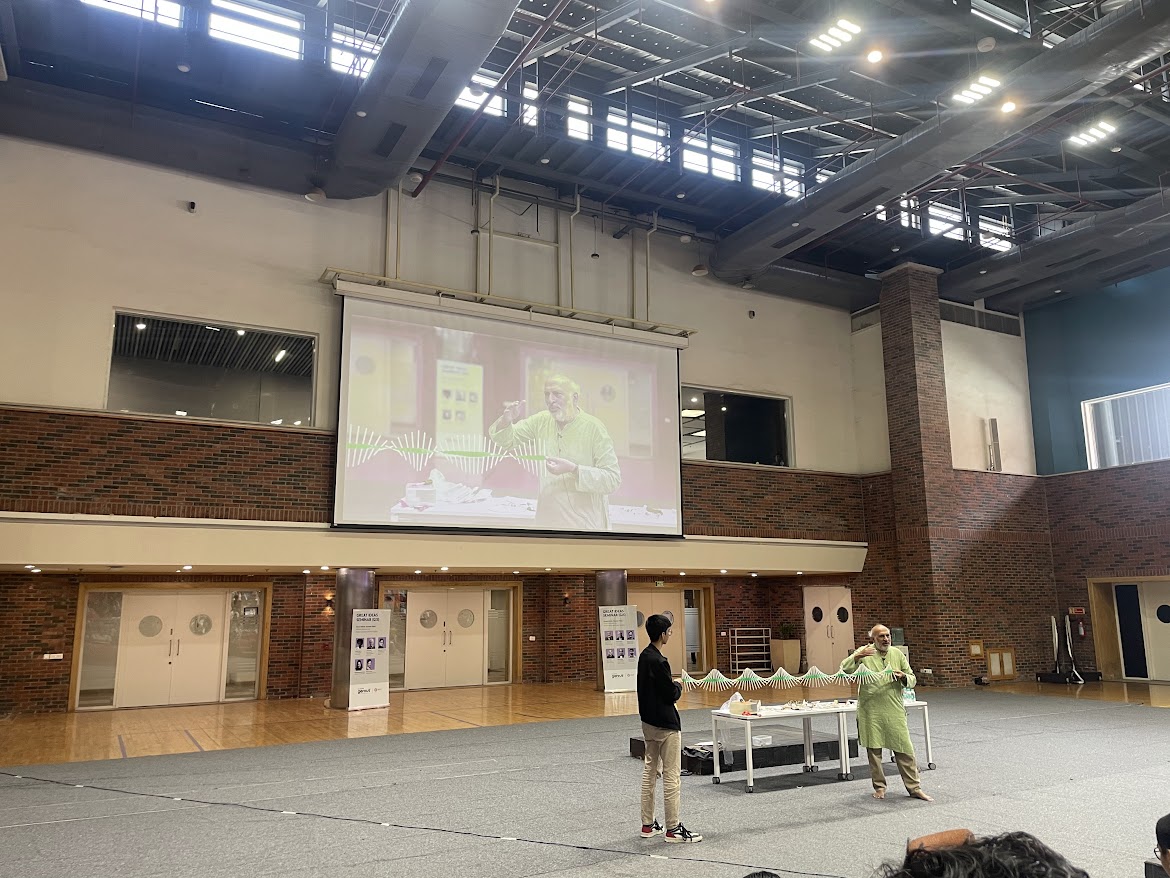
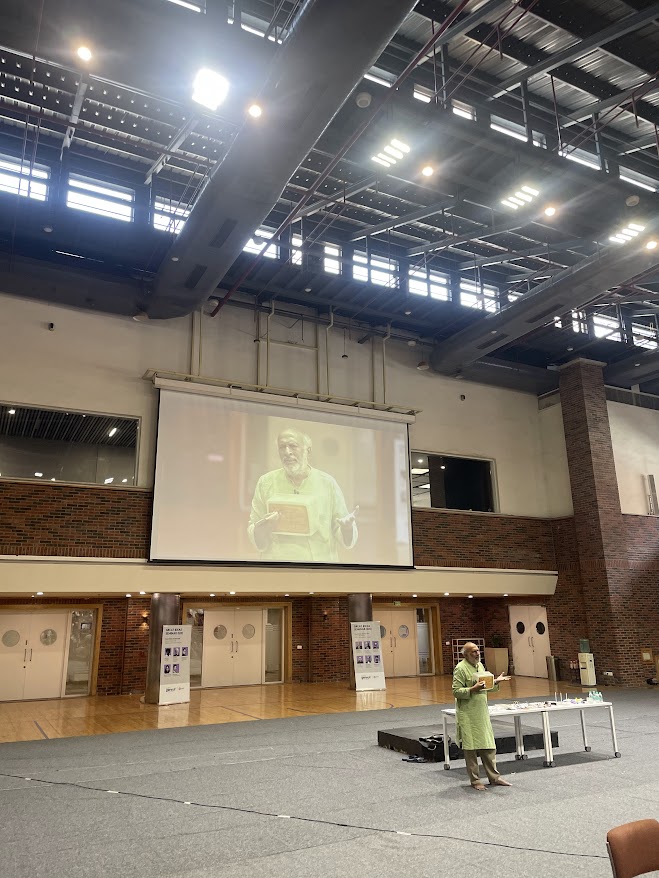
Unlike any other session in the series. Arvind Gupta has spent decades building science toys from trash — matchsticks, straws, newspaper — and using them to teach physics and mathematics to children across India. He showed us, live, how to construct a dozen different instruments in minutes. The session ended with a story about a captain at sea and a piece of newspaper used as a navigational prop. Joyful and humbling. A reminder that curiosity does not require equipment.
Mossi Traoré · Fashion Designer · Founder, MOSSI
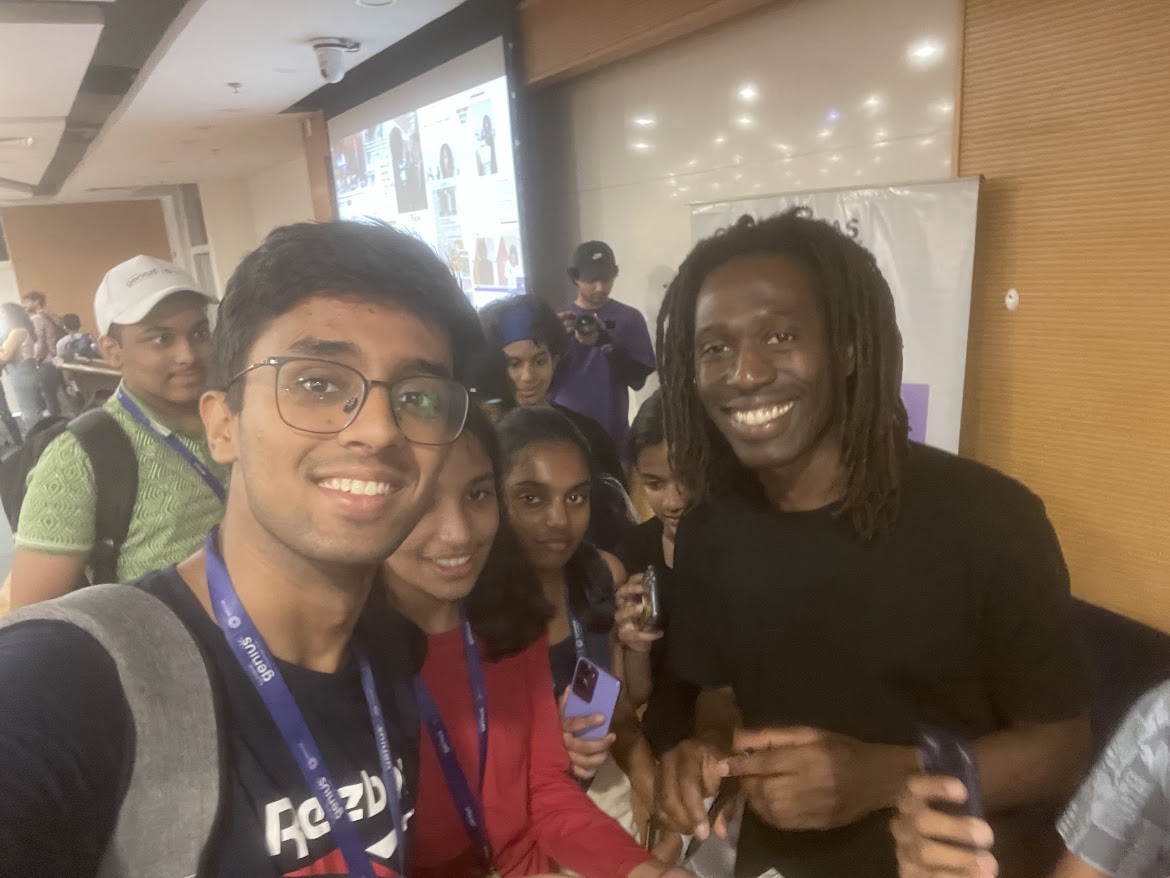
Traoré spoke about designing at the intersection of African heritage and contemporary innovation — how creativity operates under constraint. For a room full of mathematicians and scientists, it was a genuinely different mode of thinking about aesthetics and material culture. We also got the opportunity to touch and feel many of the unconventional fabrics MOSSI is working with in an effort to make fashion physically memorable.
Shri Ajay Talwar · Astrophotographer · 30+ years · One of two people to capture a tutulemma
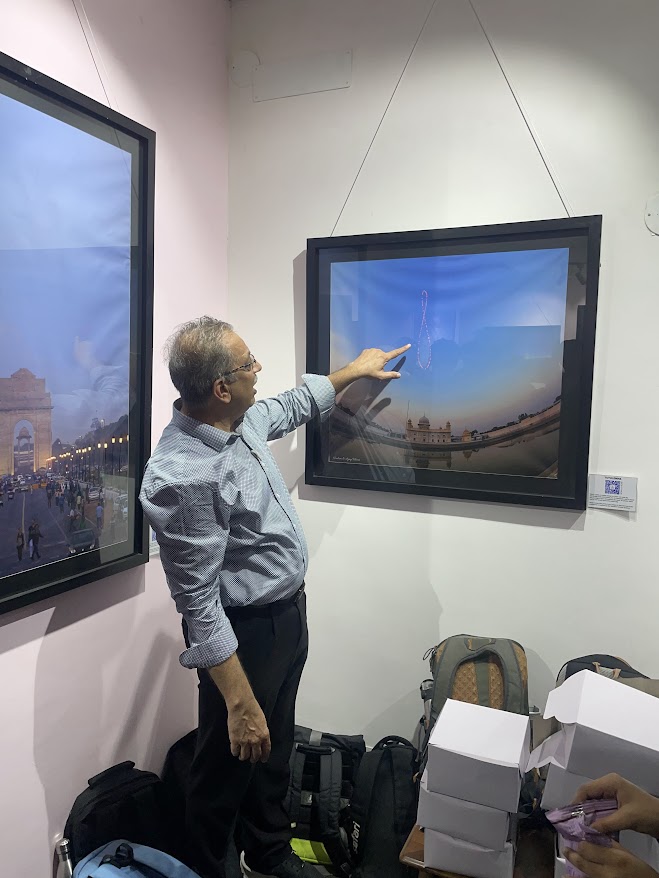
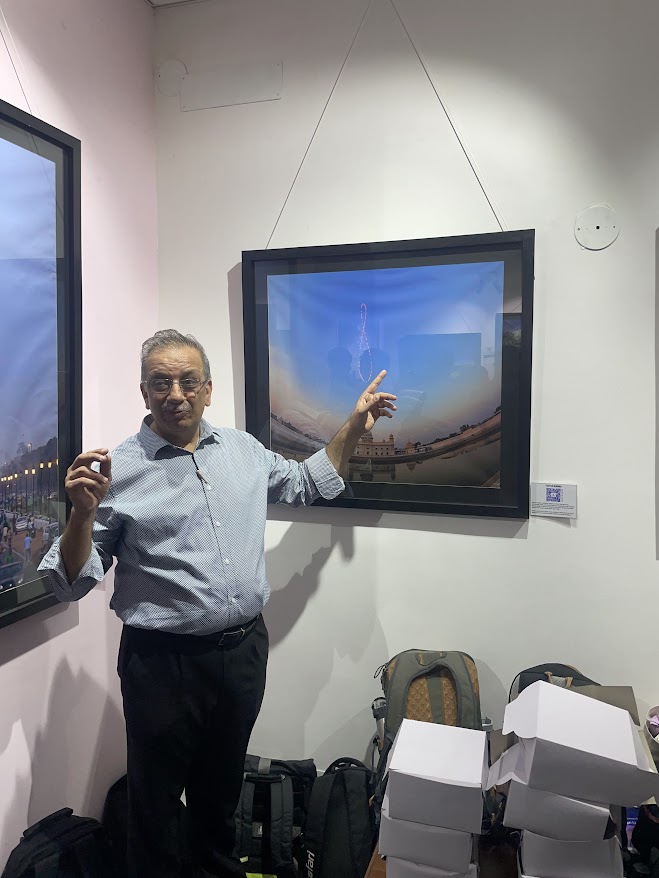
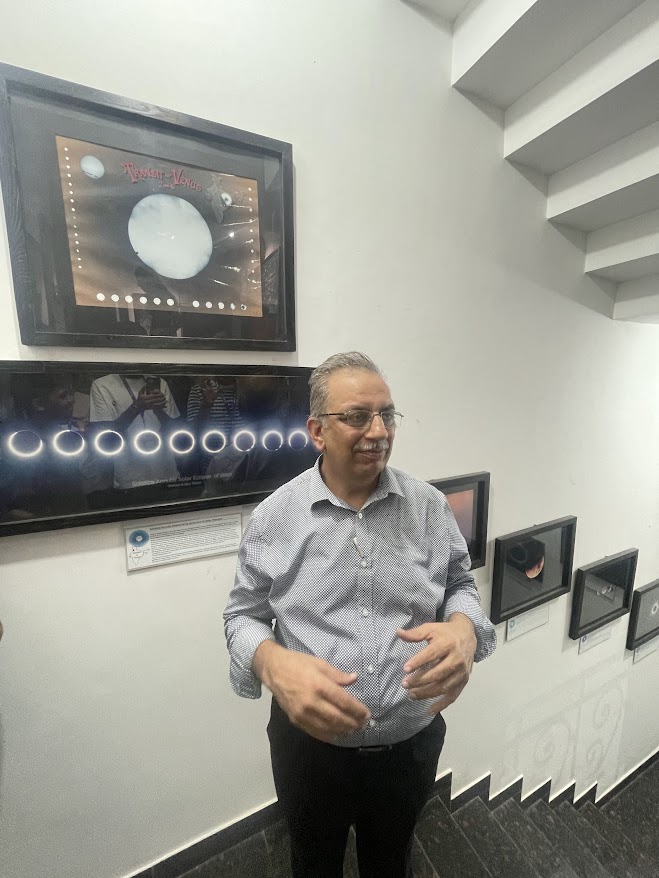
We visited Aperture Telescopes and spent an evening on astrophotography with Shri Ajay Talwar — one of only two people in the world to have ever captured a tutulemma, an analemma that contains a solar eclipse. Watching someone who has dedicated thirty years to photographing the sky talk about patience and timing was a quietly profound experience.
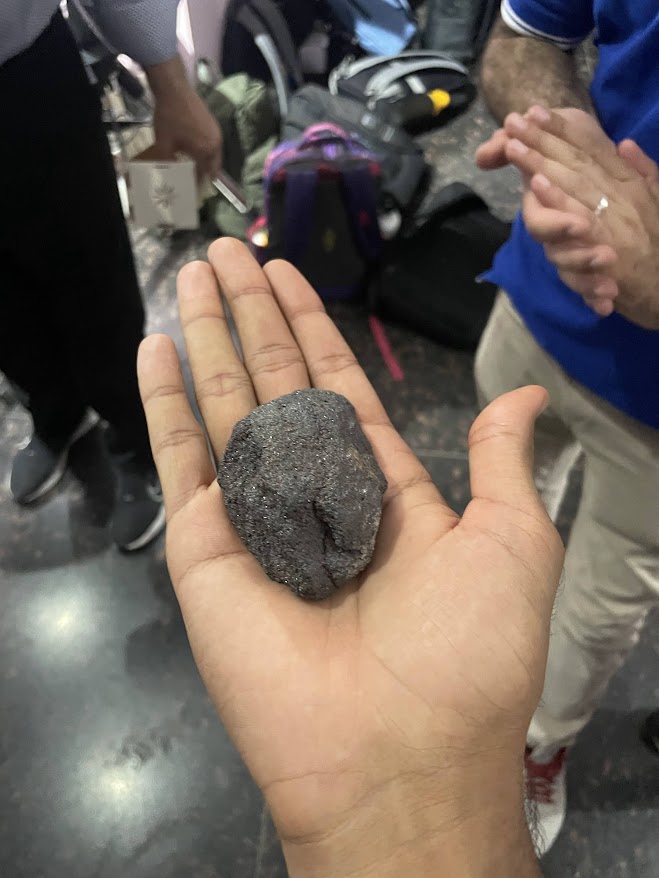
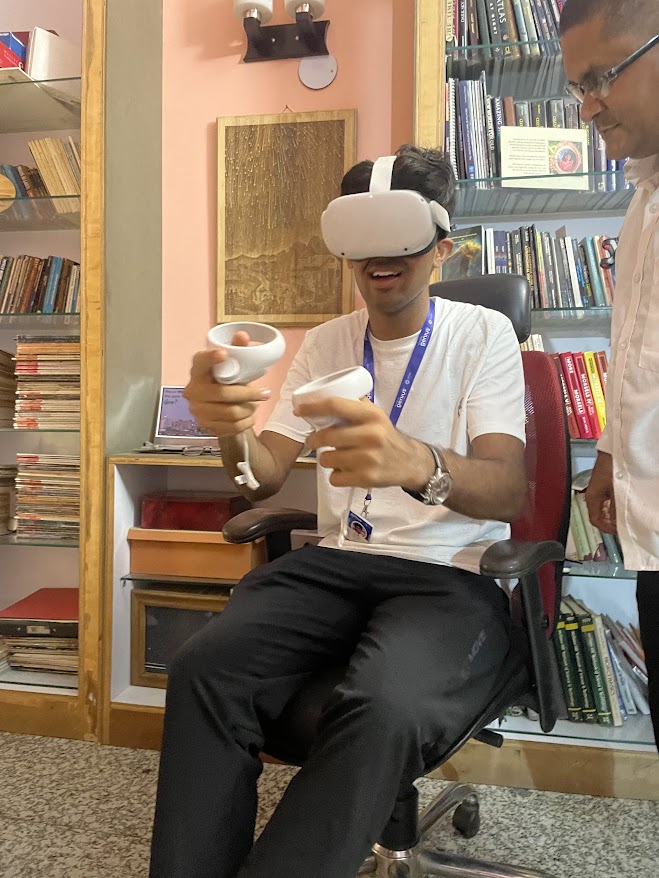
I held in my hand a fragment of a meteor that had struck north India years ago. And participated in a VR simulation of the International Space Station interior.
Professor Somak Raychaudhury · Vice-Chancellor, Ashoka University · Past Director, IUCAA
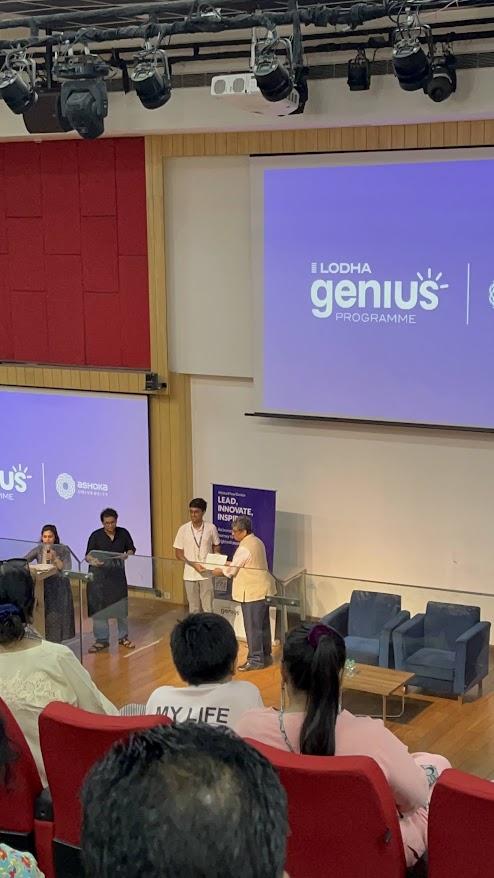
On the final day, graduation certificates were awarded by Professor Somak Raychaudhury. The programme closed as it had opened — with the sense that something real had happened in the room; that ideas had been encountered, not merely transmitted.